Multitasking Explained: How it Works on the Amiga, Mac, Windows, and Linux
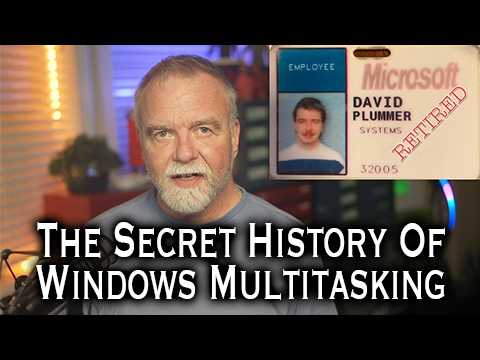
Dave Plamer, a retired Microsoft engineer, explores the evolution of multitasking from batch processing in the 1960s to modern preemptive multitasking, highlighting key innovations like time sharing and context switching that enable efficient CPU utilization and seamless multitasking in operating systems.
MAIN POINTS FROM TRANSCRIPT
- Early computing relied on batch processing, which was inefficient for CPU usage and user interaction.
- Time sharing allowed multiple users to access a computer concurrently, improving efficiency and user experience.
- Unix introduced key multitasking concepts like processes, signals, and the scheduler, enabling preemptive multitasking.
- Preemptive multitasking uses hardware timer interrupts for context switching, allowing parallel application execution.
TAKEAWAYS
- Multitasking evolution improved CPU efficiency and user interaction over decades.
- Time sharing was a revolutionary step in making computing more accessible.
- Unix played a crucial role in mainstreaming multitasking concepts.
- Context switching via timer interrupts remains fundamental in modern operating systems.