Google’s latest AI weather model gives you no excuse to forget your umbrella
WeatherNext 3 represents a major shift in meteorology driven by deep learning, and Google plans to integrate its forecasts into Search, Maps, and Gemini for users.
Everything tagged deep-learning, newest first. Tags come from the classifier reading each item's summary; 394 tags used 25 times or more have their own page.
WeatherNext 3 represents a major shift in meteorology driven by deep learning, and Google plans to integrate its forecasts into Search, Maps, and Gemini for users.
Google's Gemini team is actively developing the Gemini 3.5 Pro and Gemini 4 models, with recent checkpoints showing promising results, while competitors like Enthropic and OpenAI have raised industry standards with their advanced models.
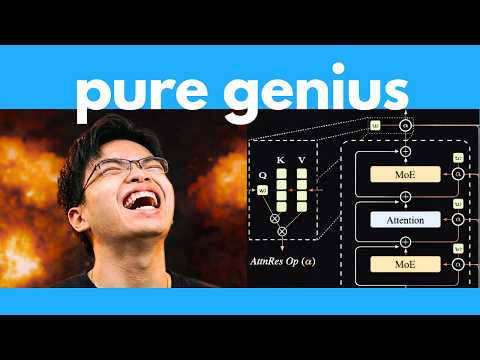
The Kimmy team's breakthrough addresses AI's amnesia problem by introducing a self-reconfiguring architecture that learns dynamically, overcoming limitations in deep model training and the vanishing gradient issue.
AI, like coffee and fitness, has evolved with complex terminologies and techniques such as machine learning, deep learning, and natural language processing, requiring developers to stay updated to effectively build models and solve problems.
The session, led by Raali, a machine learning architect, provides an overview of generative AI, agent design, and implementation, while tracing AI's historical evolution from its inception in the 1940s to the current generative AI boom.
The newly released GLM4.7 model from China is a leading open-source AI model, surpassing competitors like Deepseek and Kimik K2, and rivals top closed models such as Gemini 3 Pro and GPT 5.2, excelling in complex tasks like agentic coding and multi-step reasoning.
Machine learning, a subset of AI, involves algorithms learning patterns from data to make predictions, with deep learning as a more advanced subset using neural networks, and includes supervised, unsupervised, and reinforcement learning paradigms.
The CNN architecture mind atlas is an in-depth course exploring the evolution and philosophical underpinnings of convolutional neural networks and modern vision models, from foundational structures like LeNet to advanced models like Vision Transformers, designed to enhance understanding through historical context, design philosophies, and hands-on concepts.
Recent AI advancements include powerful 3D model generators, text-based video editing tools, advanced text-to-speech models, and innovative video character replacement technologies, showcasing significant improvements in AI capabilities and accessibility.
The course teaches building computer vision projects with Arduino, focusing on controlling an LCD with facial movements and a robotic arm using computer vision, covering topics like serial communication, face detection, and image processing.
This course offers a comprehensive, hands-on exploration of the VGG architecture in deep learning, focusing on its design, mathematics, and practical implementation using PyTorch, with extensive opportunities for experimentation and visualization.
The content invites readers to test their AI knowledge for a chance to win discounted tickets to TechCrunch Sessions: AI by answering questions about AI history and terminology.
The course offers a detailed guide to understanding and implementing Deep Seek R3, a leading deep learning model, with step-by-step instructions and theoretical insights, surpassing previous models like Gro 3 and GPT 4.5.
The Computer History Museum has released the code for the 2012 AlexNet, a pivotal breakthrough demonstrating the potential of deep learning.
Google's Gemini app has introduced advanced features like a deep research agent and Canvas, enhancing document, code, and audio interactivity, while releasing a powerful model, Gemma 3, that surpasses competitors like GBT4 Omni.
This course offers hands-on exercises to master PyTorch syntax through tasks like tabular data, image, audio, and text classification, enhancing real-world application skills.
OpenAI's Deep Research is a high-level AI reasoning tool for synthesizing information, but alternatives like Browser Use offer similar capabilities for free, integrating AI-powered research directly in browsers.
The AI engineering roadmap offers a comprehensive guide from fundamentals to advanced implementations, equipping individuals with essential skills for AI engineering success in 2025 through practical insights and hands-on experience.
This tutorial teaches essential skills for understanding and implementing deep learning research papers, focusing on reading, mathematical notation, and code navigation through practical examples.
Experts have mixed opinions on whether deep learning is hitting a wall, but recent advancements like OpenAI's o3 suggest significant progress and potential for future applications.
Machine learning, particularly Bayesian probability theory, enhances experiment selection and device control by providing predictions with confidence levels, addressing challenges like uncertainty and robustness in modern machine learning approaches.
Meta utilizes deep learning recommendation models to enhance personalized ad delivery by integrating numerous human-engineered signals within its apps.
Sam Altman has responded to claims that GPT-5, internally known as Orion, is underperforming and delayed, highlighting challenges in AI development and the need for integrated approaches beyond deep learning.
GPT, or Generative Pre-trained Transformer, is a large language model using deep learning and transformers to generate natural language text by analyzing input sequences and predicting likely outputs.
This 11-hour course offers a comprehensive introduction to machine learning and AI, covering fundamental concepts, advanced algorithms, real-world applications, and career guidance, aiming to equip learners with practical skills and industry insights.
The podcast "Smart Talks with IBM" explores the concept of openness in AI, featuring Rebecca Finlay discussing accountable AI governance and the importance of transparency for responsible technology scaling.
This Cuda programming course by Elliot Alid teaches GPU programming for high-performance computing with deep learning applications and parallel programming concepts.
Altman believes deep learning has been successful and will result in significant economic growth and prosperity.
The rapid advancement of super photorealistic AI-generated images poses a significant problem as it becomes increasingly difficult to distinguish them from real photos.
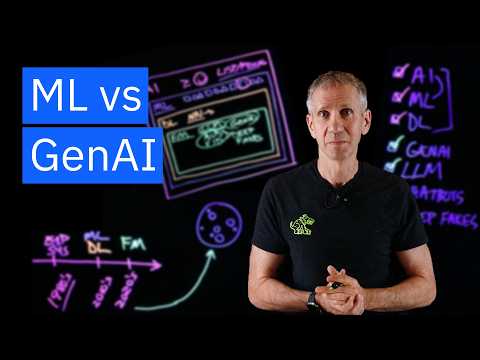
The video clarifies differences between artificial intelligence, machine learning, and deep learning, and discusses the rise of generative AI technologies.
CUDA, developed by Nvidia in 2007, revolutionizes computing by enabling GPUs to perform parallel processing for deep learning and AI, allowing developers to harness immense power for complex data computations.