AI & MLtechcrunch.com
Who’s behind the new ‘stealth model’ Ox Alpha?
A mysterious AI model called Ox Alpha has sparked intense online speculation, with certain internet communities buzzing over its origins, capabilities, and possible significance.
Everything tagged model-performance, newest first. Tags come from the classifier reading each item's summary; 394 tags used 25 times or more have their own page.
A mysterious AI model called Ox Alpha has sparked intense online speculation, with certain internet communities buzzing over its origins, capabilities, and possible significance.
Nvidia's research demonstrates that AI agents can achieve strong performance and maintain stability through fine-tuning, even when the initial AI model is not highly proficient in the task.
Rare books hold significant value for training language models as they provide unique content not found online, enhancing model capabilities.
Meta's Muse Glimmer 30 billion parameter model excels in agentic tasks and multimodal capabilities, offering a competitive edge for local deployment, despite lagging in pure coding benchmarks compared to Quen 3.627B.
OpenAI has launched the GBT 5.6 family, including Soul, Terra, and Luna, with Soul setting new standards in intelligence and efficiency across various domains, outperforming previous models while being faster and more cost-effective.
Ryan and Saahil Jain discuss the pitfalls of building AI agents with a 2024 mindset, emphasizing the importance of information retrieval and unique data for a competitive edge by 2026, while cautioning against heavy orchestration layers that can hinder model performance.
Enthropic's Claude Sonnet 5, the latest in the Sonnet series, offers improved reasoning, tool use, and coding capabilities, rivaling more expensive models like Opus 4.8, but its pricing strategy and tokenizer changes may affect cost-effectiveness.
This week in AI sees Enthropic potentially downgrading Opus 4.6 to build anticipation for Opus 4.7, alongside new developments from OpenAI and Miniax, amidst speculation and strategic shifts in model performance and infrastructure.
Google's new open-source Gemma 4 model series, under Apache 2.0 license, offers advanced reasoning and efficient workflows, with smaller models performing comparably to larger ones, ideal for local development and cloud integration.
IQ Quest Coder, developed by Quest Research, introduces an innovative loop-based architecture for software engineering models, claiming superior performance to GPT 5.1 and Cloud Sonic 4.5, though its benchmark validity is questioned due to potential data leakage and inflated results.
The Deepseek V3.1 Terminus model offers improved performance in coding, reasoning, and search capabilities, despite some trade-offs, making it a valuable update for developers, while HubSpot's guide provides strategies for leveraging AI agents in business.
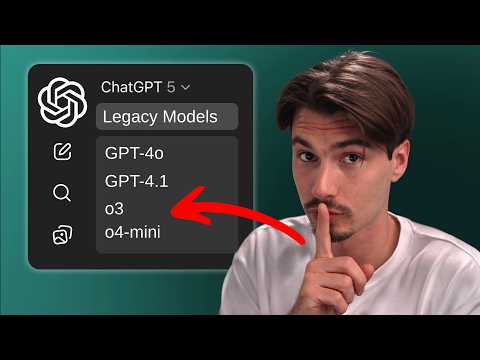
The recent release of GPT-5 has sparked mixed reactions due to initial underperformance and backlash, but improvements have been made, making it a leading AI model with enhanced features and user options.
Cache augmented generation (CAG) enhances large language models by preloading a fixed knowledge base into the model's context window, allowing efficient reuse of encoded information across multiple prompts without reprocessing.
Google's new AI model, Gemini 2.5 Flash, underperforms its predecessor, Gemini 2.0 Flash, on safety tests, showing a higher likelihood of generating text that breaches safety guidelines.
OpenAI introduces the GBT 4.1 series, offering improved performance and cost-efficiency over previous models, with significant advancements in coding, context handling, and general use cases.
OpenAI plans to address the inadequacies of current AI benchmarks by launching the OpenAI Pioneers Program, aiming to establish new standards for evaluating AI models.
In 2026, open-source models are expected to dominate due to their widespread use, though no single model will be universally the best.
Understanding and evaluating the performance of proprietary models is crucial as demand for them increases significantly.
OpenAI faces criticism over GPT-4.5, with marketing issues and unmet expectations leading to doubts about the model's effectiveness and future.
Anthropic's new Claw 3.7 Sonic model excels in hybrid reasoning, coding, and extended context, outperforming previous models and competitors significantly.
Deep Seek Version 3, an open-source model with 671 billion parameters, outperforms proprietary models in coding and various tasks, offering cost-effective and fast performance.
OpenAI has launched the 03 and 03 mini models, achieving near-human performance in various tasks, but they remain costly and require further development for efficiency.
Language model finetuning involves various approaches to improve model performance, each with specific purposes and insights into their effectiveness.
Concerns arise about GenAI systems exhausting fresh data, with synthetic data posing risks to model performance, prompting exploration of data quality as a potential solution.
Dave demonstrates adding knowledge files to language models, comparing retraining, retrieval augmented generation, and context documents, while showcasing model performance on different hardware.
The new OpenAI 01 models surpass previous versions in reasoning and problem-solving, offering innovative solutions across various fields.
OpenAI's latest model, OpenAI1, surpasses previous models in intelligence, excelling in complex tasks like coding, reasoning, and problem-solving.
Deep Seek version 2.5, a fusion of previous models, outperforms top competitors in benchmarks, offering enhanced features and integration.
This week's Mixture of Experts covers Claude 3.5 Sonnet, the new Bird Bench text-to-SQL benchmark, and the present and future of AI content.